Analog FM, DMR, NXDN and P25 carry speech in different ways. Those choices affect capacity, compatibility and what reaches the listener. Scrambling and encryption add another layer.
Source-grounded reviews, methods and a measured study, from channel plans to speech evaluation. Each article explains its evidence, practical implications and limits.
Analog FM, DMR, NXDN and P25 carry speech in different ways. Those choices affect capacity, compatibility and what reaches the listener. Scrambling and encryption add another layer.
Push-to-talk lets one person speak at a time. People, team rules, and radio settings determine who speaks next, what happens when voices collide, and when an exchange is complete.
Channels and talkgroups do more than separate traffic. A working radio plan defines who listens, who responds, what the channel is for, and what happens if it fails.
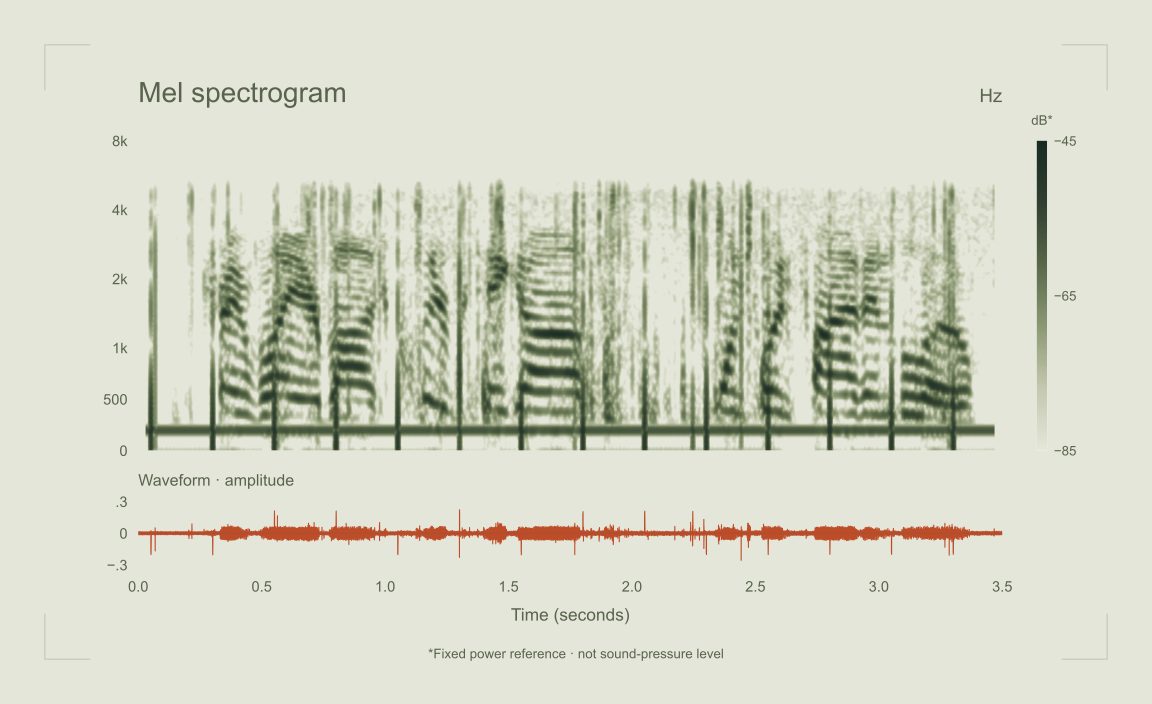
A radio does not carry a voice unchanged. Access, bandwidth, coding, and timing all reshape the speech. That helps explain why a message can sound clear yet lose the one word that matters.
A radio dataset is a sample of people, work, and signal paths. Be clear about what it represents, preserve the original recordings, and keep related sessions together during testing.
A useful radio speech-recognition test needs more than one average score. It must reveal mistakes in critical words, invented speech, test contamination, and performance on the actual device.
We connect primary research and technical standards to the realities of spoken work. Published findings, our interpretations and proposed experiments are identified separately. The channel study reanalyzes existing recordings and model outputs; its methods and evidence limits are stated explicitly.